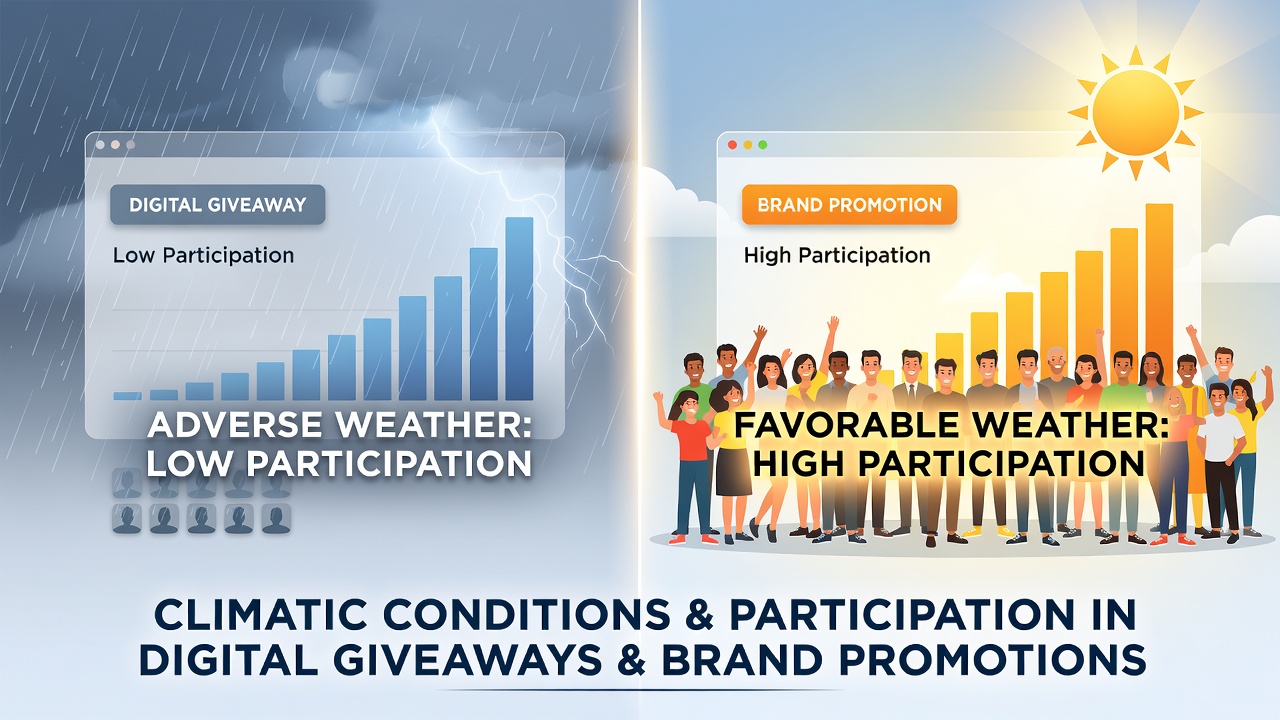
How Climatic Conditions Correlate with Participation Levels in Digital Giveaways and Brand Promotions
Climatic conditions influence participation rates in digital giveaways and brand promotions through shifts in daily routines, indoor time allocation, and device access patterns. Data from multiple marketing analytics platforms indicate that colder months often coincide with increased entry volumes in online contests, while extreme summer heat in certain regions produces variable results depending on local infrastructure and work patterns.
Seasonal Weather Patterns and Entry Volumes
Researchers tracking participation across North American and European markets have documented consistent rises in giveaway entries during periods of lower temperatures and higher precipitation. One analysis covering 2023 through 2025 found that November entries in major brand promotions climbed 18 percent on average compared with September figures, aligning with earlier onset of cooler weather in northern latitudes. Observers note that people spend more time indoors during these months, which correlates with greater smartphone and computer usage for leisure activities including contest submissions.
Conversely, data collected during heatwaves in southern states and Mediterranean countries show mixed outcomes. Some campaigns experienced dips in afternoon entries when outdoor activities remained feasible despite elevated temperatures, while others recorded steady participation when air conditioning kept households connected to digital platforms. The European Environment Agency has reported that prolonged heat periods in 2024 altered consumer online engagement timelines, shifting activity peaks to early morning and evening hours.
Regional Variations Driven by Extreme Events
Extreme weather events produce sharper short-term effects on participation. Hurricane seasons along the Atlantic coast and monsoon periods in South Asia frequently disrupt internet connectivity and power supply, leading to temporary drops in entries followed by rebounds once services resume. A 2025 study from the University of Melbourne examined Australian flood events and found that affected postcodes saw entry rates fall by up to 34 percent during the first week of disruption, then exceed baseline levels in the subsequent recovery period as residents returned to regular routines.
Winter storms in the Midwest United States and Canada have produced similar patterns according to NOAA climate records cross-referenced with promotion platform analytics. Snow days that close schools and offices tend to generate spikes in midday and evening submissions, particularly for mobile-optimized giveaways that require minimal time investment. These surges often concentrate in the 24 to 48 hours immediately following the storm's passage.
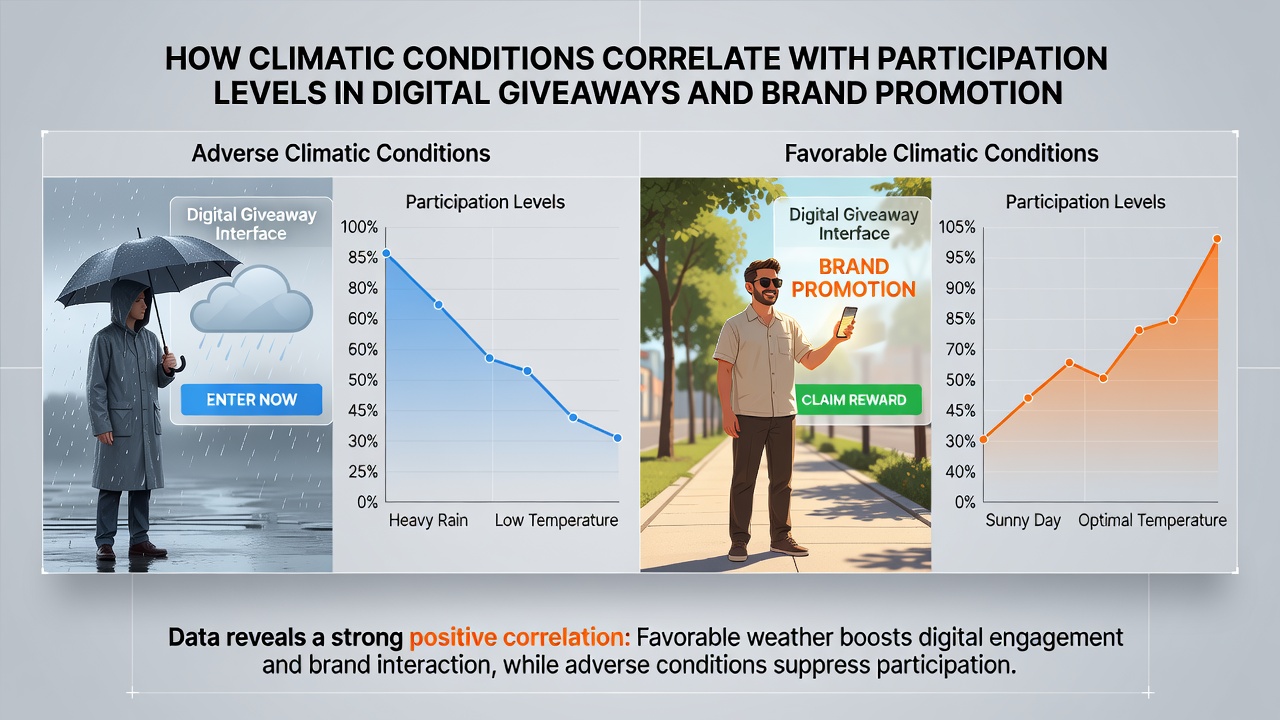
November 2026 Outlook and Emerging Data Trends
Early projections for November 2026 suggest continued alignment between cooling temperatures across the northern hemisphere and elevated digital promotion activity. Platforms preparing for holiday-adjacent campaigns are monitoring precipitation forecasts in key markets, since past data show that rainy weekends produce measurable increases in entries compared with clear weather weekends. Industry reports from the Interactive Advertising Bureau indicate that brands scheduling major giveaways during transitional weather periods achieve more predictable participation curves when they adjust entry windows to match regional climate forecasts.
Those analyzing longitudinal datasets emphasize that climate correlation does not imply causation in every case. Factors such as overlapping shopping seasons, school calendars, and major sporting events can interact with weather variables. Yet multiple studies confirm that temperature and precipitation remain statistically significant predictors of daily entry volumes when other variables are controlled.
Implications for Campaign Timing and Platform Design
Brand teams and promotion platforms have begun incorporating climate data into scheduling models. Some operators now use regional weather APIs to predict high-engagement windows and extend entry deadlines during adverse conditions that might otherwise suppress participation. Mobile-first designs with offline entry capabilities have also gained traction in areas prone to connectivity interruptions during storms or extreme heat.
Academic researchers continue to examine these relationships through larger datasets that combine meteorological records with anonymized entry logs. Findings released in 2025 by a consortium of European universities highlighted that humidity levels, in addition to temperature and precipitation, showed measurable associations with session duration on giveaway sites in subtropical climates. These granular insights help explain why certain coastal regions maintain steadier participation rates year-round compared with inland areas experiencing greater temperature swings.
Conclusion
Climatic conditions demonstrate measurable correlations with participation levels in digital giveaways and brand promotions through their effects on indoor time, device access, and routine disruptions. Data spanning multiple continents and recent years, including patterns observed ahead of November 2026, indicate that temperature drops and increased precipitation frequently coincide with higher entry volumes, while extreme events produce temporary declines followed by rebounds. Campaign planners who integrate climate considerations into timing and platform features are better positioned to maintain consistent engagement across varying weather regimes.